How to Get Rid of an Old Boat Before You Sell Your Home
Selling a home with an old boat on the property? Learn your options for disposal, donation, and professional hauling so you can close on time without the stress.
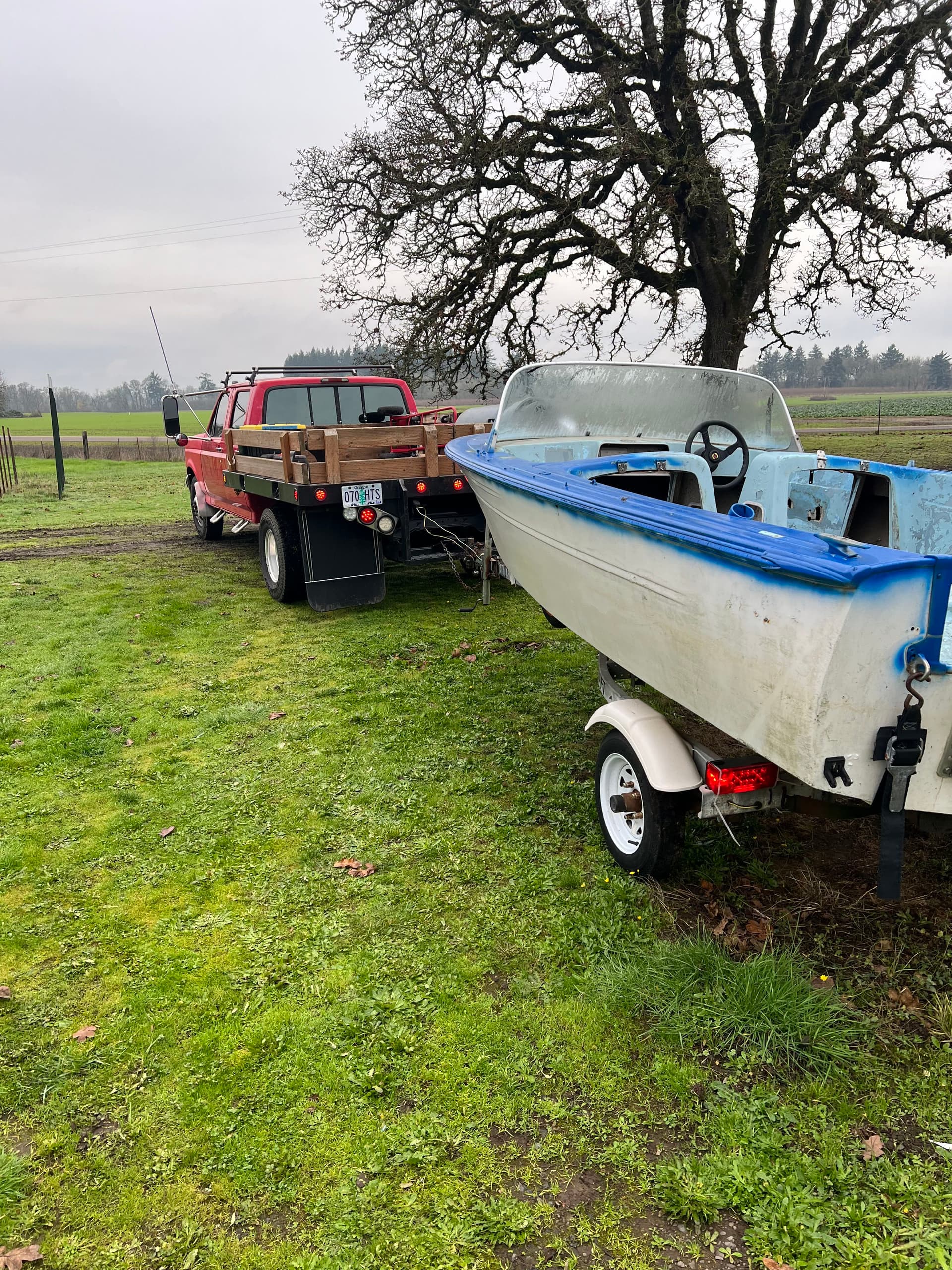
Anxious to Sell… But There’s a Boat in the Way
We recently got a call from a customer — let’s call her Sarah — who was trying to sell her mom’s home from across the country. There was just one big problem sitting right in the middle of the property: a 14-foot boat that hadn’t moved in roughly 20 years.
The boat was on a trailer, half-covered in grass, and the closing deadline was just a couple of weeks away. Sarah wasn’t even in the same state, and she was worried she’d either hold up the sale or have to see a classic 1930s boat just dumped in the landfill.
That conversation is one we have often, and it inspired this guide. If you’re staring down an old boat in the yard while your Realtor is pushing for a clean, market-ready property, here’s how we typically walk homeowners through their options.
Step One: Figure Out What You’re Dealing With
On Sarah’s call, our first questions were simple: Is it on a trailer? Can we access it? What kind of boat is it? Those basics make a huge difference in what your options look like.
Before you make any decisions, try to gather this information:
- Boat size and type: Length (e.g., 14 ft), style (runabout, fishing boat, sailboat, etc.).
- Construction material: Wood, fiberglass, aluminum, or mixed.
- Condition: Has it been sitting for years? Obvious rot, soft spots, missing parts?
- Trailer status: On a trailer? Tires flat? Rusted frame? Sunk into the ground?
- Access: Gates? Tight driveways? Low trees or power lines? Soft lawn?
When we visited Sarah’s mom’s house, we walked the loop driveway, checked that we could reach the boat with our truck, and inspected the trailer to see if we could safely tow it or if we’d need to winch and haul it.
Disposal Option #1: Junk Boat Removal & Dumping
If the boat is truly beyond saving — heavy rot, structural damage, missing major components — professional removal and disposal is usually the cleanest option.
Here’s what we typically look at on a site visit:
- Trailer towability: Can we air up tires, grease hubs, and tow it, or do we need to winch it onto our truck?
- Weight and material: Fiberglass boats can be heavier and sometimes cost more to dump than aluminum.
- Disposal site rules: Local landfills and transfer stations have specific rules and fees for boats.
In Sarah’s case, we explained we could go out, inspect the boat and trailer, estimate the weight, talk to our dump sites about how they’d accept it, and then send her a written quote by email since she was out of state.
Rough Cost Factors for Old Boat Removal
Every job is a little different, but these are the main things that affect price:
- Size: A 12–16 ft boat is usually on the lower end; larger cabin cruisers or sailboats cost more.
- Access difficulty: A clear driveway is cheaper than a boat buried in brush or mud.
- Disposal fees: Some facilities charge by weight; others have flat rates for boats.
- Extra labor: Cutting up a boat to remove it in pieces adds time and cost.
The best way to avoid surprises is exactly what we did for Sarah: a quick site visit and a no-obligation quote before any work starts.
Disposal Option #2: Donation or Rehoming a Classic Boat
Sarah’s boat was a refurbished 1930s classic, and she really hoped it wouldn’t just be tossed. It had been sitting for 20 years, but there was a chance some collector or hobbyist might want it.
When we hear that kind of story, we try to buy a little time if the closing date allows. In her case, we were working in the same town all week, so we offered to:
- Go inspect and photograph the boat.
- Post it locally (e.g., on Facebook Marketplace or community buy/sell groups).
- Ask around with local boaters and DIY restorers.
If someone is willing to take it as a project boat, that can save you disposal costs and keep a classic hull out of the landfill. Just make sure:
- You’re clear that it’s as-is and may not be usable.
- The new owner removes it by a specific date (especially before closing).
- You follow any state rules about transferring titles, if applicable.
If there’s a local marine trade school, youth program, or nonprofit that works with boats, they’re also worth a call. Sometimes they’ll take a donation; sometimes they’ll at least help spread the word.
Disposal Option #3: DIY Prep vs. Hiring a Hauler
Homeowners often ask whether they should try to handle any prep themselves. Here’s how we usually break it down.
DIY you might safely handle:
- Removing loose trash and personal items from inside the boat.
- Gathering paperwork: title, registration, or power-of-attorney if you’re acting for a parent.
- Trimming back bushes and grass so the hauler can reach the boat.
Jobs better left to a pro:
- Winching or pulling a boat that’s sunk into the ground.
- Checking structural integrity before towing.
- Dealing with fuel, oil, batteries, or other hazardous materials.
With Sarah, we let her know that because it was a long-distance situation and the boat had sat for two decades, it made more sense for us to handle the on-site decisions and keep her updated by phone and email.
What to Expect on Boat Removal Day
If you decide to hire a hauling and junk removal company, the day-of process is usually straightforward. For a typical small boat on a trailer, we’ll:
- Confirm access details one more time (gates, driveways, special instructions).
- Walk the property, inspect the boat and trailer, and review the quote if anything has changed.
- Secure the boat, check the trailer, and either tow it or load it onto our truck.
- Clean up any debris we create during removal.
For absentee owners like Sarah, we often text photos once the boat is gone so they can forward proof to their Realtor or closing agent that the property has been cleared.
How Boat Removal Fits Into Pre-Closing Cleanup
Old boats are rarely the only issue before a sale. While we’re on-site, many homeowners also ask us to:
- Remove old lawn equipment, broken patio furniture, or appliances.
- Clear brush piles or yard debris that make the property look neglected.
- Haul away leftover construction materials or junk from sheds and garages.
Knocking out these items at the same time as the boat removal can make your listing photos look better, inspections smoother, and buyers more confident that the home has been cared for.
Need an Old Boat Gone Before Closing?
If you’re in a situation like Sarah’s — distance, deadlines, and a mystery boat sitting in the yard — you’re not stuck. Whether it’s hauling to the dump, trying for a donation, or simply figuring out what’s even possible, we’re happy to walk through your options, give you a clear quote, and help you get that property market-ready on time.